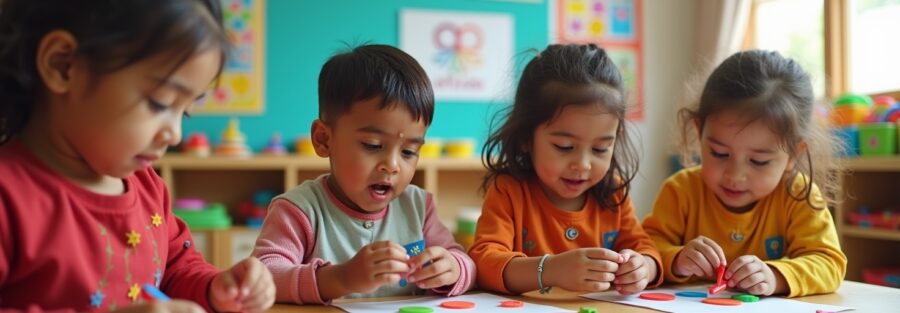
Many parents in India notice that their child struggles with tasks like holding a pencil, buttoning clothes, or using scissors during playtime or school activities. You might see this during morning routines when your child finds it hard to manage small objects or during art and craft sessions at preschool. These challenges can be particularly evident when your little one tries to engage in activities that require precision and dexterity.
If this sounds familiar, you’re not alone. These challenges are more common than you might think, and many children face similar difficulties as they develop their fine motor skills, which are essential for everyday tasks. Fine motor skills involve the small muscles in the hands and fingers, and they play a crucial role in a child’s ability to perform tasks such as writing, drawing, and self-care.
The good news is that with the right support and simple activities, children can make meaningful progress in their fine motor skills, helping them gain independence and confidence in their daily lives here in India. By incorporating engaging activities into your child’s routine, you can foster their development while making learning fun.
Table of Contents
- Understanding the Challenges Parents Notice
- How Occupational Therapy Helps Children Grow
- What Therapy Sessions Usually Involve
- Everyday Examples for Families in India
- Common Questions Parents Ask
- Next Steps for Parents in India
Understanding the Challenges Parents Notice
You might notice your child struggling with simple tasks like holding a spoon, turning pages in a book, or picking up small toys. Many children find it hard to manage buttons, zippers, or tying shoelaces, which can make dressing and self-care frustrating for both the child and the parent. These challenges can lead to feelings of inadequacy and reluctance to participate in activities that require fine motor skills.
At school, children may find it difficult to hold crayons or pencils properly, affecting their ability to draw or write. Playtime can also be challenging if your child avoids activities that require hand coordination, such as building blocks or threading beads. These difficulties can sometimes make children feel less confident or reluctant to try new tasks. For instance, a child who struggles with using scissors may avoid arts and crafts altogether, missing out on valuable learning experiences.
How Occupational Therapy Helps Children Grow
Occupational therapy (OT) supports children by helping them develop the skills they need to participate fully in daily activities, school, and play. In India, OT focuses on building independence and confidence through fun, play-based approaches that feel natural to children. Therapists often use engaging tools and activities that resonate with the child’s interests, making the learning process enjoyable.
Therapists work closely with each child, focusing on their strengths and interests to encourage progress. Celebrating small victories, like successfully buttoning a shirt or holding a pencil correctly, helps children feel proud and motivated to keep improving. For example, using colorful, oversized buttons during practice can make the experience more enjoyable and less daunting for young learners.
What Therapy Sessions Usually Involve
Therapy sessions often include activities that improve hand strength, coordination, and sensory awareness. For example, children might play with clay to strengthen fingers, use tweezers to pick up small objects, or practice cutting with child-safe scissors like the Fiskars Softgrip Scissors. These activities are designed to be fun and engaging, so children enjoy learning new skills. Incorporating items like play dough or sensory bins filled with rice or beans can also enhance their tactile experiences.
Other exercises might include practicing self-care tasks like brushing teeth or dressing, helping children become more independent. Gross motor activities, such as climbing or balancing, are also included to support overall coordination and body awareness. Simple games like Simon Says or obstacle courses can be effective in promoting both fine and gross motor skills while keeping children active and entertained.
Everyday Examples for Families in India
One family in Mumbai noticed their 4-year-old son struggled with holding crayons and became frustrated during drawing time. After a few months of occupational therapy focusing on fine motor activities like threading beads and finger painting, he began to hold crayons more comfortably and enjoyed art activities at preschool. They also incorporated activities at home, such as using large crayons or markers to encourage him to draw freely without the pressure of precision.
Another family in Bangalore shared how their daughter found it hard to button her clothes. Through simple home exercises recommended by their therapist, including practicing with large buttons and using play dough to strengthen fingers, she gradually became more confident dressing herself, making mornings easier for the whole family. They also introduced fun games like ‘dress-up’ with dolls, which encouraged her to practice buttoning and zipping in a playful context.
Common Questions Parents Ask
How do I know if my child needs occupational therapy?
If your child has difficulty with everyday tasks like holding utensils, dressing, or playing with toys compared to other children their age, it might be helpful to consult an occupational therapist. Early advice can make a big difference. Look for signs such as frustration during tasks, avoidance of activities that require fine motor skills, or difficulty with self-care routines.
How long does therapy take to show results?
Every child is unique, so progress varies. Some children show improvements within a few weeks, while others may take several months. Consistency and support at home are important parts of success. Engaging in daily fine motor skill activities, such as puzzles or crafts, can significantly enhance the effectiveness of therapy.
Will my child enjoy the sessions?
Yes, therapy is designed to be playful and engaging. Children often enjoy the activities because they feel like games, making learning new skills fun and motivating. Using tools like colorful art supplies or interactive games can help maintain their interest and enthusiasm.
Next Steps for Parents in India
Trust your instincts as a parent and seek professional guidance early if you notice your child facing challenges. Occupational therapy services are available near India to provide compassionate, play-based support tailored to your child’s needs. Look for local therapists who specialize in pediatric care and can offer personalized strategies.
Want to know more about occupational therapy in India? Then reach out to us: Talk To Expert
Taking this step can help your child gain independence and joy in everyday life. Remember, early intervention can make a significant difference in your child’s development and overall happiness. By integrating fine motor skill activities into your child’s daily routine, you can help them build the confidence they need to thrive.