Watching your child struggle to form words, follow conversations, or be understood by others can feel overwhelming. You’re not alone. According to the National Institute on Deafness and Other Communication Disorders (NIDCD), approximately 7.2% of U.S. children aged 3–17 have had a voice, speech, or language disorder in the past 12 months, with prevalence highest among ages 3–6 at 10.8%. Speech and language challenges are common—and professional help is widely available.
This guide walks Indian parents through everything you need to know about speech therapy for children: what it is, who it helps, how sessions work, what it costs, and how to choose the right therapist or centre for your family in 2026.
TL;DR / Quick Answer
Speech therapy for children is a clinical service that helps kids develop clearer speech, stronger language comprehension, and confident social communication. It’s delivered by certified speech-language pathologists (SLPs) and benefits children with speech delays, articulation disorders, stuttering, autism-related communication differences, and language-learning difficulties. Most Indian therapy centres charge between ₹800 and ₹2,500 per session, with weekly frequency recommended. Early intervention—ideally before age 5—produces the strongest outcomes, and both in-clinic and telepractice models now show comparable results in 2026 research.
Table of Contents
- What Is Speech Therapy for Children?
- Types of Speech Therapy for Children in India
- Who Needs Speech Therapy? (Conditions Treated)
- How a Speech Therapy Session Works
- Cost of Speech Therapy for Children in India
- How to Verify Speech Therapist Credentials in India (RCI & ISHA)
- Choosing the Right Therapy Setting: Clinic, Home, or Telepractice
- Speech Therapy vs. ABA, Occupational & Other Therapies
- Top Cities for Speech Therapy for Children in India
- Frequently Asked Questions
What Is Speech Therapy for Children?
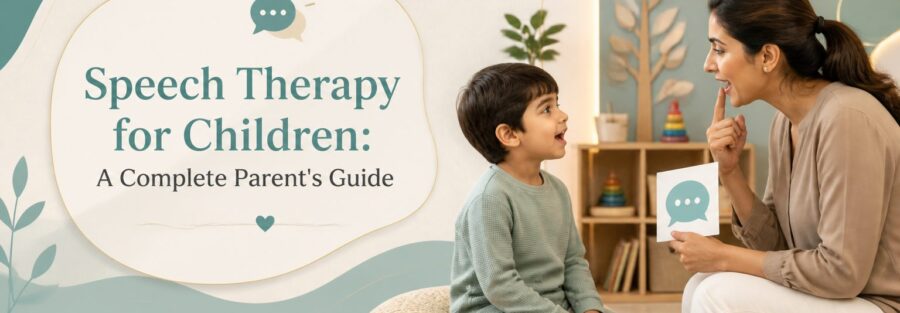
Speech therapy for children is a specialised healthcare service that helps kids develop the communication skills they need to express themselves, understand others, and participate in daily life. A qualified speech-language pathologist (SLP) works with your child through structured, play-based activities designed to improve articulation, language comprehension, vocabulary, fluency, and social communication. The goal isn’t to “fix” a child—it’s to create supportive spaces where each child’s unique communication potential can grow.
In India, speech therapy is delivered by professionals trained in audiology and speech-language pathology (BASLP) or speech-language pathology (MSc), and registered with the Rehabilitation Council of India (RCI). Centres like OT4KIDS Pediatric Therapy Centre integrate speech therapy within a multidisciplinary paediatric framework, allowing children who also need occupational or behavioural support to receive coordinated care under one roof. Parents can explore the Speech Therapy services at OT4KIDS to see how assessment, goal-setting, and family involvement are structured.
Types of Speech Therapy for Children in India
Speech therapy is not one-size-fits-all. Paediatric SLPs typically specialise in several areas, and the right type depends on your child’s profile. The most common categories Indian parents encounter include articulation therapy (correcting specific sound errors), language intervention (building vocabulary, grammar, and comprehension), fluency therapy (addressing stuttering), and social communication therapy (supporting pragmatic skills for autism and ADHD). Some centres also offer feeding-related speech work for children who struggle with chewing, swallowing, or oral-motor coordination.
A growing number of Indian centres now provide teletherapy alongside in-person sessions, especially after multiple 2025 randomised trials confirmed that online speech therapy produces outcomes comparable to in-clinic care. Centres such as OT4KIDS offer both clinic-based and structured home-practice models, often combining weekly therapist-led sessions with caregiver coaching so progress continues outside the therapy room. If you’re comparing options, browsing all therapy services at OT4KIDS can help you understand how speech therapy fits within broader developmental support.
Who Needs Speech Therapy? (Conditions Treated)
Speech therapy supports children across a wide range of conditions. The most common referral reasons in Indian paediatric clinics include speech sound disorders (difficulty producing specific sounds correctly), language delays (late talking or limited vocabulary for age), stuttering, voice disorders, and hearing-related speech challenges. Children on the autism spectrum often benefit from social communication therapy, while those with cerebral palsy, Down syndrome, or intellectual disabilities may need longer-term, multi-disciplinary support.
Other populations include children with cleft palate, ADHD-related communication challenges, and those recovering from neurological injury. Importantly, seeking speech therapy isn’t a sign of failure—it’s a proactive step. Many families who once wondered “will my child outgrow this?” find that early, targeted intervention makes a meaningful difference during critical developmental windows. Centres offering comprehensive developmental programs can assess whether speech therapy alone is needed, or whether a combined approach with occupational or behavioural therapy would better serve your child.
How a Speech Therapy Session Works
A typical speech therapy journey begins with a detailed assessment. The SLP evaluates your child’s speech sounds, language comprehension, expressive vocabulary, fluency, and oral-motor skills—often using standardised tools and play-based observation. Based on this assessment, the therapist writes an Individualised Therapy Plan (ITP) with measurable short-term and long-term goals. Sessions are usually 30–45 minutes long, held weekly or twice weekly, and structured around activities that feel like play but target specific speech or language skills.
A standard session might include picture-based vocabulary games, sound-production drills using mirrors, storytelling to build narrative skills, and parent-coaching moments so caregivers can practise strategies at home. Progress is tracked session-by-session through data collection and formal re-evaluations every 3–4 months. If you’d like to understand the assessment and goal-setting process in more detail, the OT4KIDS speech therapy process page outlines how Indian families typically move from initial screening to ongoing intervention.
Cost of Speech Therapy for Children in India
Speech therapy costs in India vary significantly by city, therapist qualifications, and session format. As a general 2026 benchmark, individual sessions range from ₹800 to ₹2,500 in metro cities like Delhi, Mumbai, Bengaluru, and Chennai, with tier-2 cities often falling slightly lower. Initial assessments may cost ₹1,500–₹4,000 depending on depth, and many centres offer monthly packages that reduce per-session costs. Group sessions and parent-training workshops are usually more affordable options for families on tighter budgets.
Insurance coverage for speech therapy in India remains inconsistent—some health policies cover it when prescribed for accident recovery or congenital conditions, while developmental delays are often excluded. Government schemes like the ADIP (Assistance to Disabled Persons for Purchase/Fitting of Aids) scheme and NHFDC (National Handicapped Finance and Development Corporation) loans may help eligible families. Because pricing is highly individualised, the best first step is to contact a therapy centre directly for a personalised quote based on your child’s needs.
How to Verify Speech Therapist Credentials in India (RCI & ISHA)
Verifying your therapist’s credentials is one of the most important steps a parent can take. In India, qualified speech-language pathologists hold a BASLP (Bachelor in Audiology and Speech-Language Pathology) or MSc (Speech-Language Pathology) degree from an RCI-approved institution, and they must be registered with the Rehabilitation Council of India (RCI) to legally practise. Membership in the Indian Speech and Hearing Association (ISHA) is an additional marker of professional engagement.
When evaluating a centre or individual therapist, don’t hesitate to ask for proof of registration, degree certificates, and clinical experience with your child’s specific condition. Reputable centres will share this willingly. For families evaluating paediatric therapy teams, the OT4KIDS team page showcases the qualifications of their multidisciplinary staff, and the About OT4KIDS page provides background on their 25+ years of clinical expertise. A transparent centre will also let parents observe sessions—a hallmark of trustworthy, family-integrated care.
Choosing the Right Therapy Setting: Clinic, Home, or Telepractice
The “best” therapy setting depends on your child’s age, attention span, specific goals, and your family’s logistics. Clinic-based therapy offers structured environments with specialised equipment, peer interaction opportunities, and immediate therapist feedback. Home-based therapy can be more convenient for younger children or those with sensory sensitivities who struggle in new environments. Telepractice—delivered via video call—has emerged as a clinically validated alternative, with multiple 2025 studies showing outcomes comparable to in-person care for speech sound disorders and stuttering.
Many Indian families now use a hybrid model: weekly clinic sessions combined with parent-led home practice reinforced through teletherapy check-ins. This approach was strongly supported by a 2026 randomised trial where caregiver-mediated intervention produced meaningful language gains in preschoolers. Centres that offer clinic-based, home-based, and online therapy options give families the flexibility to choose what works best at each stage of the journey.
Speech Therapy vs. ABA, Occupational & Other Therapies
Parents often wonder whether their child needs speech therapy, ABA therapy, occupational therapy, or some combination. Each discipline addresses different—but often overlapping—skills. Speech therapy focuses on communication: speech sounds, language, fluency, and social interaction. ABA (Applied Behaviour Analysis) therapy focuses on behaviour, learning, and skill-building through structured reinforcement, often supporting children with autism. Occupational therapy (OT) addresses sensory processing, motor skills, and daily-living independence—skills like handwriting, dressing, and self-regulation.
For many children with autism, ADHD, or developmental delays, the most effective approach is multidisciplinary. A child with autism, for example, might receive speech therapy for communication, ABA therapy for behavioural and learning goals, and occupational therapy for sensory and motor development—all coordinated under one care plan. The right combination depends on your child’s unique profile, and a comprehensive assessment is the best starting point for deciding which therapies to prioritise.
Top Cities for Speech Therapy for Children in India
Access to qualified paediatric speech therapists has grown substantially across Indian metros. Delhi-NCR, Mumbai, Bengaluru, Chennai, Hyderabad, Pune, and Kolkata all host multiple RCI-registered centres with experienced SLPs. Delhi-NCR in particular has seen strong growth in multidisciplinary paediatric centres that integrate speech, occupational, and behavioural therapy. When choosing a city or locality, consider commute time (consistency matters more than prestige), the centre’s specialisation in your child’s condition, and the availability of both in-person and teletherapy options.
For families in Delhi, centres like OT4KIDS operate from accessible locations including Hari Nagar and Chittranjan Park, serving families across the capital region. You can visit OT4KIDS New Delhi therapy centres or call +91 9999856433 to schedule an initial consultation. Many centres also offer virtual assessments, making it easier for families in smaller towns to begin the process without immediate travel.
Frequently Asked Questions
What is speech therapy for children?
Speech therapy for children is a clinical service delivered by certified speech-language pathologists that helps kids improve articulation, language comprehension, vocabulary, fluency, and social communication through structured, play-based intervention tailored to each child’s developmental level.
At what age should my child start speech therapy?
The earlier, the better. Most paediatric SLPs recommend starting as soon as a delay is identified—often between 18 months and 3 years—because early intervention takes advantage of critical brain-development windows and produces stronger long-term outcomes.
How long does speech therapy take to show results?
Visible progress is typically observed within 3–4 months of consistent weekly sessions, though the total duration depends on the child’s condition, severity, and frequency of home practice between sessions.
Is online speech therapy as effective as in-person therapy?
Yes. Multiple 2025–2026 randomised controlled trials confirm that telepractice combined with parent-led home practice produces outcomes comparable to in-clinic therapy for speech sound disorders and stuttering.
Does insurance cover speech therapy in India?
Coverage varies by insurer and policy. Some policies cover speech therapy for accident recovery or congenital conditions, while developmental delays are often excluded. Check directly with your insurer and ask centres about documentation support for claims.
How do I know if my child needs speech therapy?
Common signs include not speaking by 18 months, being hard to understand by age 3, limited vocabulary for age, stuttering, difficulty following directions, or visible frustration when trying to communicate. A professional assessment provides clarity.
Can parents participate in speech therapy sessions?
Yes. Most Indian paediatric centres encourage parent involvement and offer home-practice coaching so caregivers can reinforce skills between sessions—a strategy shown by 2026 research to produce outcomes comparable to therapist-led delivery.
What’s the difference between speech therapy and ABA therapy?
Speech therapy focuses on communication skills like speech sounds, language, and social interaction. ABA therapy focuses on behaviour, learning, and skill-building through structured reinforcement. Many children with autism benefit from both, often combined with occupational therapy.
For more information, you can explore frequently asked questions about children’s therapy at OT4KIDS, read parent success stories, or review the centre’s recognitions and milestones.
Conclusion
Speech therapy for children is one of the most well-evidenced interventions in paediatric healthcare, with strong 2026 research confirming its effectiveness—whether delivered in-clinic, at home, or via telepractice. If your child is showing signs of a speech or language delay, the most powerful step you can take is to seek a professional assessment early. Look for RCI-registered therapists, ask about their experience with your child’s specific needs, and choose a setting—whether clinic, home, or hybrid—that fits your family’s reality.
If you’re based in Delhi-NCR, consider booking an initial consultation with a multidisciplinary paediatric centre like OT4KIDS to discuss your child’s communication goals and explore a personalised therapy plan. Every small step your child takes is a meaningful victory—and the right support can help those steps come faster.