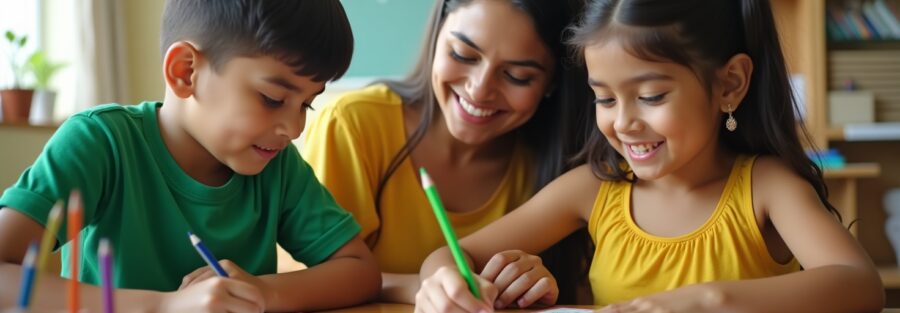
Many parents in Malviya Nagar notice that their child struggles with handwriting, especially during homework or school activities. You might see your child avoiding writing tasks or feeling frustrated when asked to write, which can affect their confidence and daily routines. This struggle often manifests in various ways, such as messy letters, difficulty spacing words, or even pain in their hands after writing for a short period.
If this sounds familiar, you’re not alone. These challenges are quite common among children, and many families in Malviya Nagar face similar concerns. The good news is that with the right support, children can make meaningful progress and enjoy writing more. In fact, many parents have reported significant improvements in their children’s writing skills after engaging in occupational therapy.
Occupational therapy for poor handwriting in Malviya Nagar offers a gentle, play-based approach to help your child develop the skills they need. With patience and encouragement, your child can gain confidence and improve their handwriting over time. Therapists often use engaging tools like colorful gel pens or textured paper to make the writing process more enjoyable.
Table of Contents
- Understanding the Challenges Parents Notice
- How Occupational Therapy Helps Children Grow
- What Therapy Sessions Usually Involve
- Everyday Examples for Families in Malviya Nagar
- Common Questions Parents Ask
- Next Steps for Parents in Malviya Nagar
Understanding the Challenges Parents Notice
You might notice that your child has difficulty holding a pencil properly or that their handwriting is hard to read. Many children struggle with fine motor skills, which are the small movements needed for writing. This can make schoolwork tiring and frustrating for them. For instance, if your child is unable to grip a pencil correctly, they may end up pressing too hard or too lightly, leading to inconsistent writing pressure.
At home, your child may avoid writing tasks or become upset when asked to write. During play, they might find it hard to use scissors or build with small blocks, activities that also help develop hand strength and coordination. These challenges can affect their confidence and willingness to participate in daily routines. For example, if a child struggles with writing, they may also hesitate to participate in art projects or even simple note-taking in class, which can hinder their overall learning experience.
How Occupational Therapy Helps Children Grow
Occupational therapy supports your child’s independence and confidence by focusing on the skills they need for everyday activities like writing, playing, and self-care. Therapists use play-based approaches that make learning fun and engaging, helping children build skills without feeling pressured. For instance, they might use games that involve tracing letters in sand or using apps designed to improve fine motor skills.
Therapy is child-centered, meaning it builds on your child’s strengths and interests. Celebrating small victories, like holding a pencil correctly or writing a neat letter, encourages your child and helps them feel proud of their progress. This positive experience motivates them to keep improving. Additionally, incorporating tools like the Handwriting Without Tears program can provide structured guidance to enhance their writing skills.
What Therapy Sessions Usually Involve
During therapy sessions, your child might engage in sensory play to improve hand awareness, such as playing with textured materials or squeezing soft balls. Fine motor skill games like threading beads or using tweezers help strengthen hand muscles needed for writing. These activities are not only beneficial but also enjoyable, making your child look forward to each session.
Gross motor activities, such as climbing or balancing, support overall coordination and posture, which are important for sitting comfortably while writing. Therapists also practice self-care tasks like buttoning clothes or using utensils, which build hand dexterity. For example, using adaptive tools like pencil grips can also be introduced to help your child maintain a proper grip while writing.
All activities are designed to be fun and motivating, so your child looks forward to each session and feels successful. Incorporating games like Simon Says or obstacle courses can further enhance their engagement during therapy.
Everyday Examples for Families in Malviya Nagar
One family in Malviya Nagar noticed their 7-year-old son struggled with messy handwriting and avoided homework. After starting occupational therapy, he began enjoying activities like drawing and tracing letters with colorful markers. Over a few months, his handwriting improved, and he felt more confident at school. His parents also reported that he started volunteering to write notes for family events, showcasing his newfound enthusiasm.
Another child found it hard to hold a pencil properly and often complained of hand pain. Therapy sessions included playful exercises to strengthen his fingers and improve grip. His parents saw a positive change in his ability to write longer sentences and participate more happily in class activities. They also incorporated writing games at home, such as writing letters to family members, which made practicing fun and interactive.
Common Questions Parents Ask
How do I know if my child needs occupational therapy?
If your child has difficulty with handwriting, avoids writing tasks, or struggles with fine motor skills like buttoning clothes or using scissors, it may be helpful to seek an occupational therapy evaluation. Early support can make a big difference. Observing your child’s interactions during play can also provide insights into their motor skills and confidence levels.
How long does therapy take to show results?
Every child progresses at their own pace. Some children show improvement within a few weeks, while others may take several months. Consistency and support at home also play important roles in success. Setting aside daily practice time for writing can reinforce the skills learned during therapy sessions.
Will my child enjoy the sessions?
Yes, therapy is designed to be fun and engaging. Using play-based activities tailored to your child’s interests helps keep them motivated and happy during sessions. Incorporating their favorite themes, such as superheroes or animals, can make the learning process even more enjoyable.
Next Steps for Parents in Malviya Nagar
Trust your instincts as a parent and seek professional guidance early if you notice your child facing challenges. Occupational therapy services are available near Malviya Nagar to provide compassionate, play-based support tailored to your child’s needs. Researching local therapists and reading reviews can help you find the right fit for your child.
Want to know more about occupational therapy in Malviya Nagar? Then reach out to us: Talk To Expert
Taking this step can help your child gain independence and joy in everyday life. Remember, early intervention can make a significant difference in your child’s development and overall happiness. By fostering a supportive environment at home and collaborating with professionals, you can help your child thrive.