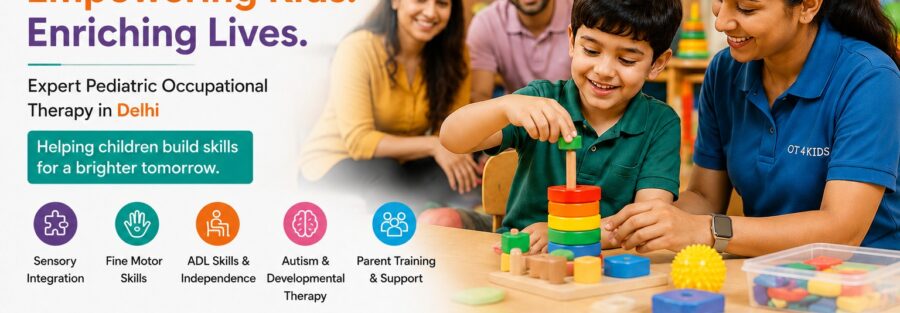
Early Intervention and Personalized Occupational Therapy Programs That Support Every Child’s Development
Every child learns, grows, and develops at their own pace.
While some children naturally acquire everyday skills with ease, others may face challenges that make daily activities more difficult than expected.
Simple tasks such as:
- Holding a pencil correctly
- Buttoning a shirt
- Sitting attentively in class
- Following instructions
- Managing emotions
- Using scissors
- Playing with peers
- Completing school activities
can sometimes become overwhelming.
When these difficulties begin affecting a child’s confidence, independence, learning, or social participation, occupational therapy can provide the support they need to thrive.
Across Delhi, more parents are recognizing the importance of early intervention and developmental support. Occupational therapy has become one of the most effective ways to help children develop essential life skills while improving their ability to participate successfully at home, school, and within the community.
Quick Overview
Occupational therapy helps children develop the physical, sensory, cognitive, emotional, and social skills required for everyday life.
Pediatric occupational therapy can support children experiencing:
✔ Autism Spectrum Disorder (ASD)
✔ ADHD
✔ Sensory Processing Challenges
✔ Developmental Delays
✔ Learning Difficulties
✔ Motor Coordination Problems
✔ Handwriting Difficulties
✔ Self-Care Challenges
The ultimate goal is to help children become more confident, independent, and successful in daily activities.
What Is Occupational Therapy for Children?
Occupational Therapy (OT) is a specialized healthcare service designed to help children develop the skills they need to perform everyday activities effectively.
Rather than focusing only on specific developmental challenges, occupational therapy takes a holistic approach to helping children participate more successfully in the environments that matter most.
These include:
- Home
- School
- Playgrounds
- Social settings
- Community activities
Pediatric occupational therapists work on developing a wide range of skills, including:
- Fine Motor Skills
- Gross Motor Skills
- Sensory Processing
- Handwriting
- Attention & Concentration
- Emotional Regulation
- Self-Care Skills
- Social Participation
- School Readiness
- Daily Living Activities
Through engaging, child-centered activities, therapists help children build independence while making learning enjoyable and meaningful.
Why Occupational Therapy Plays an Important Role in Child Development
Childhood is a critical period of growth.
Development occurs simultaneously across multiple areas, and challenges in one area often impact others.
Occupational therapy focuses on strengthening these foundational abilities so children can participate more confidently in everyday life.
Physical Development
Occupational therapy helps improve:
- Balance
- Coordination
- Strength
- Postural Control
- Motor Planning
These skills support everyday movement and participation.
Cognitive Development
Therapy can strengthen:
- Attention
- Memory
- Problem-Solving
- Executive Functioning
- Task Completion Skills
These abilities directly influence learning and academic performance.
Sensory Development
Children learn how to better process and respond to sensory information from their environment.
Improved sensory processing often leads to better focus, behavior, and participation.
Emotional Development
Therapists help children develop:
- Self-confidence
- Emotional Awareness
- Frustration Tolerance
- Self-Regulation Skills
This contributes to greater independence and resilience.
Social Development
Occupational therapy can improve:
- Peer Interaction
- Communication Skills
- Group Participation
- Social Confidence
Helping children build stronger relationships with others.
Signs Your Child May Benefit from Occupational Therapy
Many parents wonder whether their child needs occupational therapy.
While every child develops differently, certain signs may indicate that additional support could be beneficial.
Fine Motor Skill Challenges
Your child may struggle with:
- Holding a pencil
- Handwriting
- Cutting with scissors
- Using buttons and zippers
- Drawing or coloring activities
Sensory Processing Difficulties
Some children may:
- Avoid certain textures
- Be highly sensitive to sounds
- Dislike clothing tags
- Seek excessive movement
- Become overwhelmed in busy environments
Attention & Focus Concerns
Common signs include:
- Difficulty staying seated
- Easily distracted behavior
- Trouble completing tasks
- Challenges following instructions
Motor Coordination Difficulties
You may notice:
- Frequent falls
- Clumsiness
- Poor balance
- Difficulty catching or throwing a ball
Self-Care Challenges
Daily routines may become difficult, including:
- Dressing independently
- Feeding skills
- Personal hygiene tasks
- Managing belongings
When these challenges affect daily functioning, a professional occupational therapy assessment can provide valuable insight.
Conditions Commonly Supported Through Occupational Therapy
Occupational therapy benefits children experiencing a wide range of developmental and neurological challenges.
Autism Spectrum Disorder (ASD)
Children with autism often benefit from support in:
- Sensory Processing
- Social Participation
- Daily Living Skills
- Communication Support
- Independence Development
Occupational therapy helps children engage more effectively in meaningful activities.
Attention Deficit Hyperactivity Disorder (ADHD)
Therapy can help children improve:
- Attention Control
- Organization Skills
- Self-Regulation
- Impulse Management
- Executive Functioning
Supporting success at home and school.
Sensory Processing Challenges
Children who struggle to interpret sensory information may experience difficulties with learning, behavior, and emotional regulation.
Sensory integration techniques help improve how the brain processes sensory input.
Developmental Delays
Targeted interventions help children strengthen foundational skills while promoting overall development.
Learning Difficulties
Occupational therapy supports the underlying skills required for successful classroom participation and academic performance.
Cerebral Palsy & Neurological Conditions
Therapy focuses on:
- Movement
- Coordination
- Independence
- Daily Functioning
Helping children participate more fully in everyday activities.
Why Early Intervention Matters
One of the most important principles in pediatric therapy is early intervention.
The earlier developmental challenges are identified, the greater the opportunity for positive progress.
Early intervention can help:
- Improve developmental outcomes
- Build confidence
- Reduce frustration
- Enhance school readiness
- Strengthen independence
- Support family involvement
Because children’s brains are highly adaptable during the early years, timely support can have a lasting impact.
Understanding Sensory Integration Therapy
Sensory integration is a core component of many occupational therapy programs.
Children constantly process information through multiple sensory systems, including:
- Touch
- Movement
- Balance
- Sight
- Sound
- Taste
- Smell
When sensory processing becomes challenging, children may struggle to respond appropriately to everyday situations.
Occupational therapists use structured sensory integration activities to help children process sensory information more effectively.
This often results in improvements in:
- Attention
- Learning
- Emotional Regulation
- Social Participation
- Daily Functioning
How Occupational Therapy Supports School Success
Many challenges observed in school are connected to underlying developmental difficulties.
Occupational therapy strengthens the skills that children need for academic success.
Handwriting Development
Therapy helps improve:
- Pencil Grip
- Hand Strength
- Fine Motor Control
- Writing Endurance
Attention & Concentration
Children learn strategies to:
- Stay Focused
- Follow Instructions
- Complete Classroom Tasks
Organizational Skills
Support is provided for:
- Planning
- Sequencing
- Task Management
- Problem Solving
Classroom Participation
As skills improve, children often become more engaged, confident, and successful learners.
Why Families Choose OT4KIDS in Delhi
Choosing the right therapy center is an important decision.
OT4KIDS provides child-centered occupational therapy programs designed to support each child’s unique developmental needs.
Specialized Pediatric Expertise
Focused exclusively on supporting children with developmental, sensory, learning, and motor challenges.
Personalized Therapy Plans
Every child receives an individualized intervention program based on their strengths, goals, and developmental profile.
Experienced Therapy Professionals
Therapy is delivered by professionals experienced in pediatric development and evidence-based intervention approaches.
Family-Centered Approach
Parents are actively involved in the therapy process, helping ensure consistency across home, school, and therapy environments.
Holistic Child Development
The goal extends beyond isolated skills to support confidence, independence, participation, and quality of life.
Frequently Asked Questions
What age can a child begin occupational therapy?
Occupational therapy can begin as soon as developmental concerns are identified.
How do I know if my child needs occupational therapy?
If developmental, sensory, motor, learning, or self-care challenges are affecting daily activities, a professional assessment may be beneficial.
Is occupational therapy only for children with autism?
No. Occupational therapy supports children with a wide variety of developmental, sensory, learning, and neurological challenges.
How long does occupational therapy take?
The duration depends on each child’s needs, goals, and progress.
Can parents participate in therapy?
Yes. Parent involvement plays a critical role in achieving successful outcomes and maintaining progress across environments.
Helping Children Reach Their Full Potential
Every child deserves the opportunity to participate confidently in daily life.
When developmental, sensory, motor, or learning challenges create obstacles, occupational therapy provides structured support that helps children build essential skills, independence, and confidence.
From improving handwriting and attention to strengthening sensory processing and daily living skills, occupational therapy empowers children to succeed at home, school, and within the community.
With early intervention, personalized care, and strong family involvement, children can develop the skills they need to thrive both today and in the future.